

Real Estate Professional Status
REPS is the single most powerful tax designation available to real estate investors. If you qualify, your rental losses bypass the passive activity rules entirely — turning paper losses into real tax savings against your W-2, 1099, or business income.
Test #1
The 750-Hour Rule
You must perform more than 750 hours of services during the tax year in real property trades or businesses in which you materially participate.
Test #2
The >50% Rule
More than 50% of your total personal services performed across all trades or businesses during the year must be in real property trades or businesses.

REPS turns your rental portfolio into a powerful tax reduction tool.
What Is Real Estate Professional Status?
Real Estate Professional Status — commonly abbreviated as REPS — is a tax classification defined under IRC Section 469(c)(7). It was created by Congress to recognize that people who work full-time in real estate are fundamentally different from passive investors. When you qualify, the IRS stops treating your rental activities as "passive" and instead treats them as "active" or "non-passive" — which completely changes how your rental losses interact with the rest of your tax return.
Under normal passive activity rules, rental losses can only offset other passive income. If you earn $400,000 from your job and generate $150,000 in rental losses through depreciation and expenses, those losses are essentially trapped. They carry forward year after year, waiting for passive income to absorb them — or until you sell the property.
REPS eliminates that wall. Once you qualify, your rental losses become non-passive and can directly reduce your W-2 wages, self-employment income, business profits, capital gains, and virtually any other income on your return. For high-income real estate investors, this single designation can mean six figures in annual tax savings.

Why Is REPS So Powerful?
The power of REPS becomes clear when you pair it with accelerated depreciation strategies like cost segregation studies. A cost segregation study reclassifies portions of a building into shorter-lived asset categories (5, 7, and 15 years instead of 27.5 or 39 years), dramatically front-loading your depreciation deductions. Combined with bonus depreciation, it is not uncommon for an investor to generate $200,000 or more in paper losses on a single property in the first year of ownership.
Without REPS, those losses sit on the shelf. With REPS, they wipe out your taxable income immediately. Consider a married couple where one spouse is a high-earning physician making $600,000 per year, and the other spouse manages their rental portfolio full-time. If the managing spouse qualifies for REPS and they generate $200,000 in accelerated depreciation losses, their joint taxable income drops from $600,000 to $400,000 — saving them roughly $70,000 to $80,000 in federal taxes alone, depending on their bracket and state.
This is not a loophole or a gray area. It is a well-established provision of the tax code that Congress specifically designed for people who work in real estate as their primary profession. The key is making sure you actually qualify — and that you can prove it if the IRS comes knocking.
Who Usually Qualifies?
Full-Time Real Estate Investors
If real estate is your only occupation, you pass the >50% test easily. Focus on logging 750+ hours.
Real Estate Agents & Brokers
Commission income from buying and selling properties counts as a real property trade or business.
Stay-at-Home Spouses Who Manage Rentals
If you don't work another job, all your work hours are in real estate — the >50% test is automatic.
Property Managers & Developers
Construction, development, and property management all count toward your real estate hours.
Who Doesn't Qualify?
Full-Time W-2 Employees
A 2,000-hour day job makes the >50% test nearly impossible. You would need over 2,000 hours in real estate on top of your job.
Passive Investors with Property Managers
If you hire out all management tasks, you likely cannot reach 750 hours of personal involvement.
Can't qualify for REPS? The Short-Term Rental Loophole offers a powerful alternative that does NOT require Real Estate Professional Status.
What Activities Count Toward Your 750 Hours?
The IRS defines "real property trades or businesses" broadly under Section 469(c)(7)(C). Qualifying activities include real property development, redevelopment, construction, reconstruction, acquisition, conversion, rental, operation, management, leasing, and brokerage. In practical terms, this covers a wide range of day-to-day tasks that most active real estate investors already perform.
Time spent on the following activities generally counts: researching and analyzing potential acquisitions, negotiating purchase contracts, coordinating with lenders and title companies, screening and interviewing tenants, drafting and reviewing lease agreements, overseeing maintenance and repairs, coordinating with contractors for renovations, managing bookkeeping and accounting for rental properties, conducting property inspections, attending real estate education courses and seminars directly related to your properties, driving to and from properties for management purposes, and communicating with property managers, tenants, and vendors.
However, not everything counts. Time spent as a passive investor — such as reviewing quarterly statements from a syndication you invested in — does not qualify. Similarly, time spent on activities that are not directly related to a real property trade or business, such as studying for an unrelated certification or managing non-real-estate investments, cannot be included in your hour count.
The Spouse Rules: What Most People Get Wrong

One of the most common misconceptions about REPS involves married couples filing jointly. Many people assume that because they file a joint return, they can pool their hours together to meet the 750-hour and >50% thresholds. This is incorrect, and the IRS has successfully challenged this in Tax Court multiple times.
The rules are clear: one spouse must independently satisfy both the 750-hour test and the >50% test entirely on their own. You cannot add your 400 hours to your spouse's 400 hours and claim you hit 800 hours. Each spouse's qualification is evaluated separately.
The good news is that once one spouse qualifies, the REPS designation applies to the entire joint return. This is exactly why the strategy is so popular among couples where one spouse has a high-paying career (doctor, attorney, executive) and the other spouse manages the real estate portfolio full-time. The managing spouse qualifies for REPS, and the rental losses offset the high-earning spouse's income on the joint return.
If you are considering this strategy, it is critical that the qualifying spouse actually performs the work, keeps detailed logs, and can demonstrate their involvement if audited. Having the high-earning spouse sign the checks while the other spouse claims the hours is a red flag the IRS knows to look for.
Material Participation: The Step Most People Forget
Qualifying as a Real Estate Professional is only half the battle. REPS alone does not automatically make your rental losses non-passive. You must also materially participate in each rental activity that generates the losses you want to deduct.
Material participation has its own set of seven tests (the most common being the 500-hour test or the "substantially all participation" test), and you must meet at least one of them for each rental activity. If you own five rental properties and only materially participate in three of them, only the losses from those three properties become non-passive.
There is an important planning opportunity here: the grouping election. Under Reg. 1.469-9(g), a taxpayer who qualifies as a Real Estate Professional can elect to treat all rental activities as a single activity for purposes of the material participation test. This means that instead of needing to meet the 500-hour threshold for each individual property, you only need to meet it once for the entire grouped portfolio. For investors with multiple properties, this election can be the difference between a six-figure deduction and a carryforward loss that sits unused for years.
The grouping election must be made on a timely-filed tax return (including extensions) for the first year you want it to apply, and once made, it generally cannot be revoked without a material change in facts and circumstances. This is one of many reasons why working with a tax professional who specializes in real estate is essential — timing and election decisions can have permanent consequences.
Documentation: How to Survive an IRS Audit
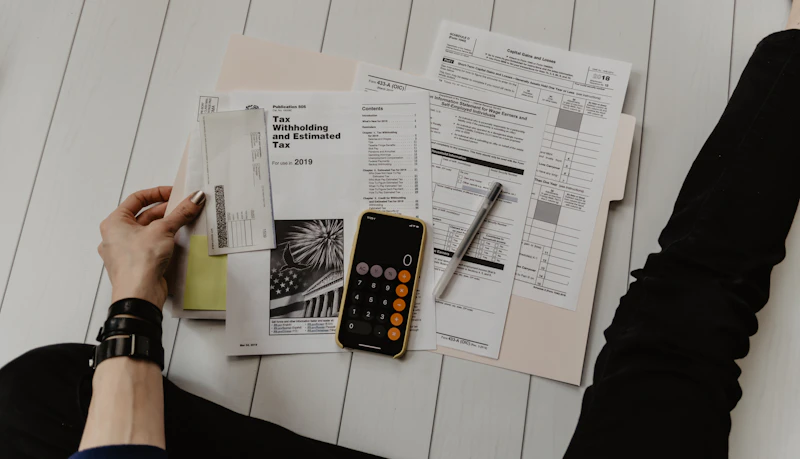
The IRS audits REPS claims more aggressively than almost any other real estate tax position. The reason is simple: the tax savings are enormous, and the IRS knows that many taxpayers claim REPS without actually meeting the requirements. If you are going to claim Real Estate Professional Status, your documentation needs to be bulletproof.
The gold standard is a contemporaneous time log — a record of your hours that is maintained in real time throughout the year, not reconstructed from memory after December 31st. The Tax Court has repeatedly ruled against taxpayers who could only produce after-the-fact estimates or vague summaries. In Pohler v. Commissioner and numerous similar cases, courts have denied REPS status because the taxpayer's logs were deemed unreliable or incomplete.
Your log should include four key elements for each entry: the date, a description of the activity performed, the property or business it relates to, and the number of hours spent. You do not need to track your time to the minute, but entries like "worked on real estate — 8 hours" are not specific enough. Better entries look like: "April 15 — Showed Unit 3B to prospective tenant, reviewed application, called references — 123 Main St — 2.5 hours."
We recommend updating your log at least weekly. Many of our clients use a simple spreadsheet or a dedicated tracking app. The important thing is consistency. A well-maintained log is your single best defense in an audit, and it costs nothing but a few minutes of your time each week.
Common IRS Audit Triggers
Claiming REPS with a full-time W-2 job
The IRS cross-references your W-2 hours with your REPS claim. If your employer reported 2,080 hours, you need to show >2,080 in real estate.
Large rental losses with few properties
Claiming 750+ hours on a single rental property raises questions about what activities consumed that much time.
No contemporaneous time log
Reconstructed logs created during an audit are given little to no weight by the Tax Court.
Using a third-party property manager
If someone else handles day-to-day operations, you must show what you personally did for 750+ hours.
Inconsistent tax return history
Suddenly claiming REPS in a year with large cost segregation deductions — when you never claimed it before — draws attention.
Not Sure If You Qualify?
REPS is one of the most powerful tax strategies available — but it is also one of the most frequently challenged by the IRS. Before you claim it, get a professional review of your hours, your employment status, and your documentation.
Book a Free ConsultationREPS vs. the Short-Term Rental Loophole: Which Strategy Is Right for You?
If you have been researching ways to use rental real estate losses to offset your active income, you have probably encountered two main strategies: Real Estate Professional Status and the Short-Term Rental (STR) Tax Loophole. Both achieve the same end result — converting passive rental losses into non-passive losses — but they have very different qualification requirements.
REPS requires you to spend more than 750 hours in real estate and more than 50% of your working time in real estate. This makes it ideal for full-time investors, agents, and spouses who manage properties but nearly impossible for anyone with a demanding W-2 career.
The STR Loophole, by contrast, requires that you own a short-term rental property (average guest stay of 7 days or less) and that you materially participate in its operation for 100+ hours per year (with nobody else spending more time on it than you). Critically, it does not require you to be a Real Estate Professional. This makes it the go-to strategy for high-income W-2 earners — doctors, lawyers, tech executives — who cannot meet the >50% test but still want to use rental losses to reduce their tax bill.
Many of our clients use both strategies simultaneously. For example, one spouse qualifies for REPS and manages the long-term rental portfolio, while the couple also owns a short-term rental that generates additional non-passive losses through the STR loophole. The right combination depends on your specific situation, which is exactly what we help you figure out during a free strategy consultation.
Real-World Example: How REPS Saves $87,000 in Taxes
Let's walk through a realistic scenario. Sarah is an orthopedic surgeon earning $650,000 per year. Her husband, Mike, left his corporate job two years ago to manage their growing rental portfolio of eight single-family homes. Mike spends approximately 1,400 hours per year on real estate activities — researching deals, managing tenants, coordinating repairs, handling bookkeeping, and overseeing a renovation project.
Because Mike has no other job, 100% of his work hours are in real estate, so he easily passes the >50% test. His 1,400 hours far exceeds the 750-hour minimum. Mike qualifies as a Real Estate Professional.
Sarah and Mike also completed a cost segregation study on three properties they acquired in the current tax year, generating $220,000 in accelerated first-year depreciation. Because Mike qualifies for REPS and they file jointly, those $220,000 in rental losses are non-passive and directly offset Sarah's surgical income. Their taxable income drops from $650,000 to $430,000 — saving them approximately $87,000 in combined federal and state taxes.
Without REPS, those same $220,000 in losses would be classified as passive and would carry forward indefinitely, providing no immediate tax benefit. The difference between having REPS and not having it is $87,000 in real cash flow — in a single year.
Frequently Asked Questions About REPS
What is Real Estate Professional Status (REPS)?
Real Estate Professional Status is an IRS tax classification under IRC Section 469(c)(7) that allows qualifying taxpayers to treat rental real estate losses as non-passive losses. This means your rental losses can offset W-2 wages, business income, and other active income without the usual $25,000 passive loss limitation. It is considered one of the most valuable tax designations available to real estate investors.
What are the two tests to qualify for REPS?
You must pass both tests simultaneously. First, the 750-Hour Test: you must spend more than 750 hours during the tax year in real property trades or businesses in which you materially participate. Second, the >50% Test: more than half of all personal services you perform during the year must be in real property trades or businesses. Failing either test means you do not qualify, regardless of how well you met the other.
Can spouses combine hours to qualify for REPS?
No. One spouse must independently meet both the 750-hour test and the >50% test entirely on their own. You cannot combine hours between spouses to reach the thresholds. However, once one spouse qualifies, the REPS benefits apply to the entire joint return — meaning the rental losses can offset the other spouse's income as well.
What activities count toward the 750-hour requirement?
Qualifying activities include real property development, construction, acquisition, rental operations, property management, leasing, and brokerage. Day-to-day tasks like tenant screening, maintenance coordination, bookkeeping, property inspections, deal analysis, contractor oversight, and lease negotiations all count. Time spent as a licensed real estate agent or broker also qualifies. Passive activities like reviewing syndication statements do not count.
Can a W-2 employee qualify for Real Estate Professional Status?
It is extremely difficult for a full-time W-2 employee to qualify because of the >50% test. If you work 2,000 hours at your day job, you would need more than 2,000 hours in real estate activities — effectively requiring two full-time jobs. However, part-time employees, those who leave a W-2 job mid-year, or a non-working spouse may still qualify. If you cannot meet the REPS requirements, the Short-Term Rental Loophole may be a better fit.
How should I document my hours for REPS?
The IRS expects contemporaneous logs — records kept in real time, not reconstructed after the fact. Each entry should include the date, a description of the activity, the property it relates to, and the hours spent. Update your log at least weekly. Courts have consistently denied REPS claims where taxpayers could only produce vague or after-the-fact estimates. A detailed, consistent log is your best audit defense.
Ready to Find Out If You Qualify for REPS?
The IRS audits REPS claims more than almost any other real estate tax position. Don't guess — get a definitive answer from a tax professional who specializes in real estate investor strategies. Our free 30-minute consultation will review your hours, employment status, and documentation readiness.